
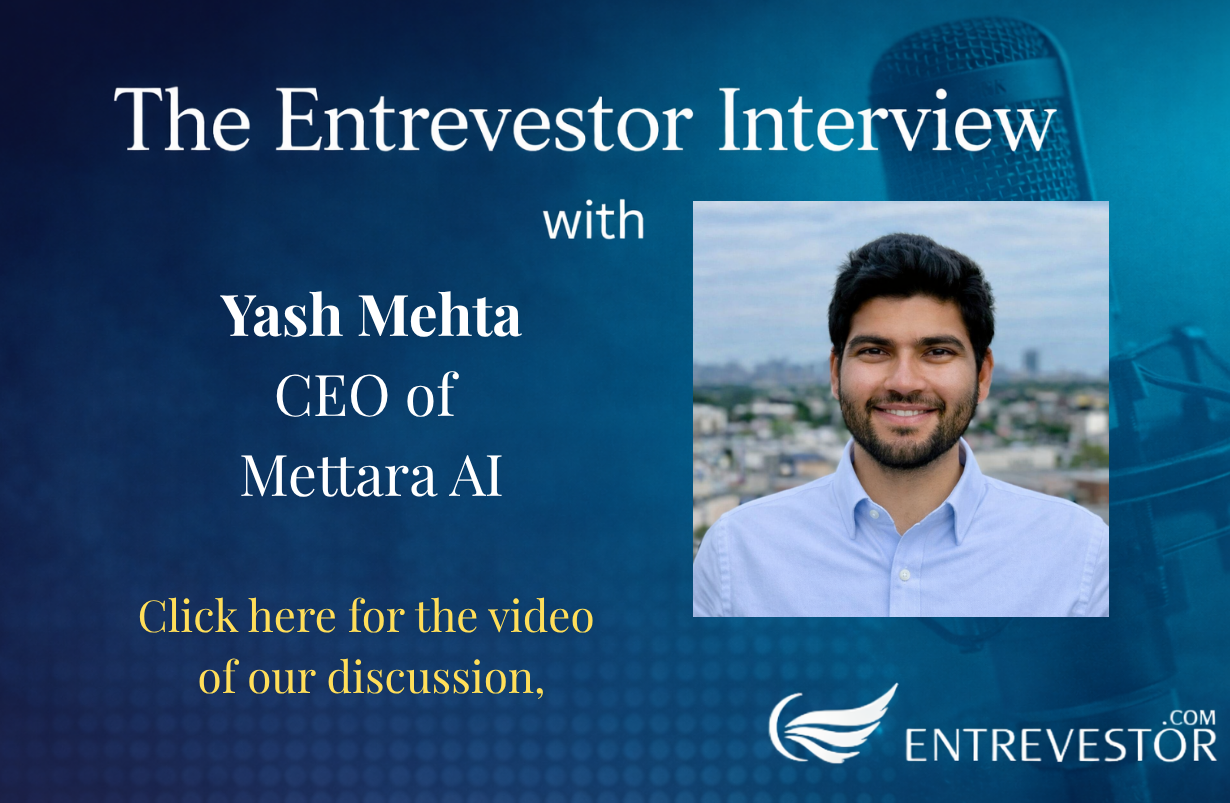
Yash Mehta is more interested in the quality than the quantity of early adopters as he plots the growth of four-month-old Mettara AI, which now has annual recurring revenue of US$40,000.
Yes, you read that correctly. Halifax-based Mettara was only an idea on New Year’s Day. But in the few months since, Mehta and Co-Founder Steve Day have launched the product, found paying customers, and been accepted into Invest Nova Scotia’s Accelerate program.
The Mettara platform uses agentic AI to help small and medium-sized businesses install and progress on SaaS products, ensuring that digital tools are used to their fullest advantage. As well as the onboarding process, it helps bring SMEs up-to-speed on all the features of a SaaS product – features that might go unused because adopting them can be confusing and time-consuming.
“Mettara is helping complex SaaS platforms with user onboarding and adoption through our embedded agents that operate the platform for the end-user just by speaking to your platform,” Mehta, the company’s CEO, said in an interview. “So, if your user wants to get an outcome, they don't have to learn the complex platform. They don't need to spend time with the CSM [customer support manager].”
This company – the first we’ve covered that actually launched in 2026 – exemplifies a massive and growing trend in the startup movement. Small teams are using artificial intelligence to create a product quickly and capture immediate customers. The low costs and fast adoption mean these companies can grow without courting external investors, at least in the early stages.
Mehta conceived of the company when he was working as a CSM for Kitchener, Ont.-based Plum.io, which operates a talent assessment platform. He noticed that customers usually need to spend time – often watching videos or calling customer support – to get up to speed with the technology.
Working off a platform Mehta had developed in his spare time a few years earlier, the two co-founders launched Mettara on Jan. 24 or 25, and booked their first customer on Feb. 1. Five days later they had ARR of US$30,000 and that figure has risen to US$40,000 in April.
Mehta says he has come to think of his early adopters more as partners than customers because they have bought in to the product and offer such constructive feedback – feedback that he calls “beyond priceless”. As he and Day are still iterating the product, he believes the quality of customer for this year is more important than the volume of clients.
“We're actually being challenged so much on our own assumptions of what we thought our customer would want,” he said. “It's helping us really change our road map. Not necessarily change it, but steer it in a direction that is more towards customer-centric as opposed to what we thought the customer would want.”
For 2026, the two entrepreneurs want to continue to bring on more clients, but they want engaged clients who will help them develop an optimal platform. Although they had planned to develop Mettara by bootstrapping, their discussions with clients and with mentors in the Accelerate program have them considering a capital raise.
“We are thinking about doing it, but not anytime soon,” said Mehta. “We talked internally [about a plan in which} once we hit US$100,000 to US$200,000 ARR, which should be a couple more months from now, that's when we'll consider doing some kind of raise, primarily because we had an investor out of Montreal that really was like, ‘You guys have something here.’”